


Mount Nemrut: Monument of Gods and Kings
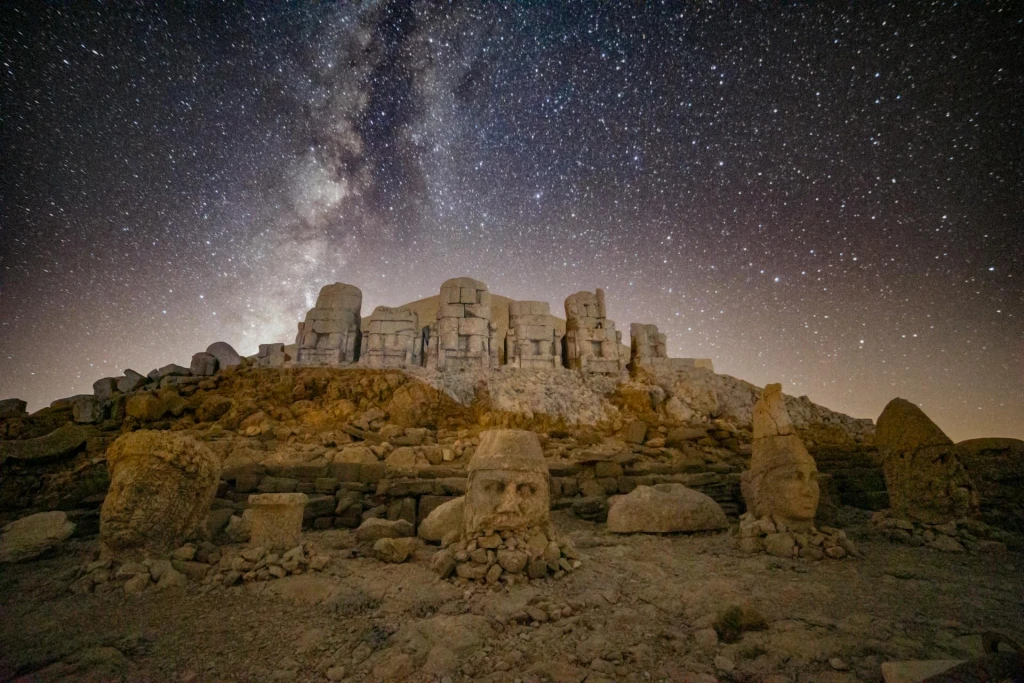
Mount Nemrut is one of the most remarkable archaeological sites in Turkey and a key highlight of the Mesopotamia region. Located in Adıyaman Province, Mount Nemrut stands at an altitude of over 2,100 meters and is internationally recognized as a UNESCO World Heritage Site.
The monument was built in the 1st century BC by King Antiochus I of the Kingdom of Commagene. It was designed as a sacred funerary sanctuary intended to immortalize the king by placing him among the gods. The site reflects a rare synthesis of Greek, Persian, and Anatolian cultures, making it unique in the ancient world.
The Statues of Mount Nemrut
Mount Nemrut is best known for its colossal stone statues and monumental heads. These sculptures depict gods such as Zeus, Apollo, and Hercules, alongside the Commagene king Antiochus I. Originally seated on thrones, the statues were later damaged by earthquakes, causing their heads to fall and rest in front of the bodies. This dramatic arrangement has become the defining image of Mount Nemrut.
Archaeological and Cultural Significance
Mount Nemrut represents one of the most ambitious royal monuments of antiquity. The tumulus at the summit is believed to cover the tomb of Antiochus I, although it has never been fully excavated. The site illustrates how ancient rulers used architecture and symbolism to express power, divine legitimacy, and cultural unity.
Sunrise and Sunset at Mount Nemrut
The summit of Mount Nemrut offers exceptional panoramic views of the surrounding Mesopotamian landscape. Sunrise and sunset are considered the most striking times to visit, as changing light conditions highlight the scale and details of the statues, creating an atmosphere that emphasizes the monument’s spiritual and ceremonial purpose.
Visiting Mount Nemrut Today
Mount Nemrut is accessible via guided tours that allow visitors to explore the site safely and in depth. Due to its elevation and weather conditions, planning and local expertise are essential. As part of a Mesopotamia itinerary, Mount Nemrut serves as a powerful connection between ancient belief systems and the timeless landscape of Southeastern Turkey.
Mount Nemrut is not only an archaeological site but also a symbol of humanity’s desire to leave a lasting legacy, making it one of the most meaningful destinations in the Mesopotamia region.